
In my experience, many inventors come to me excited to get a “patent pending” status for their invention. Perhaps they’ve heard the term and think it’s a badge of innovation. While “patent pending” is undoubtedly valuable, it’s not a starting point—it’s a milestone on a much longer innovation journey.
A good patent strategy begins long before filing a patent and continues long after the “patent pending” status is achieved.
Here’s what inventors and entrepreneurs need to consider at every stage of the patent process:
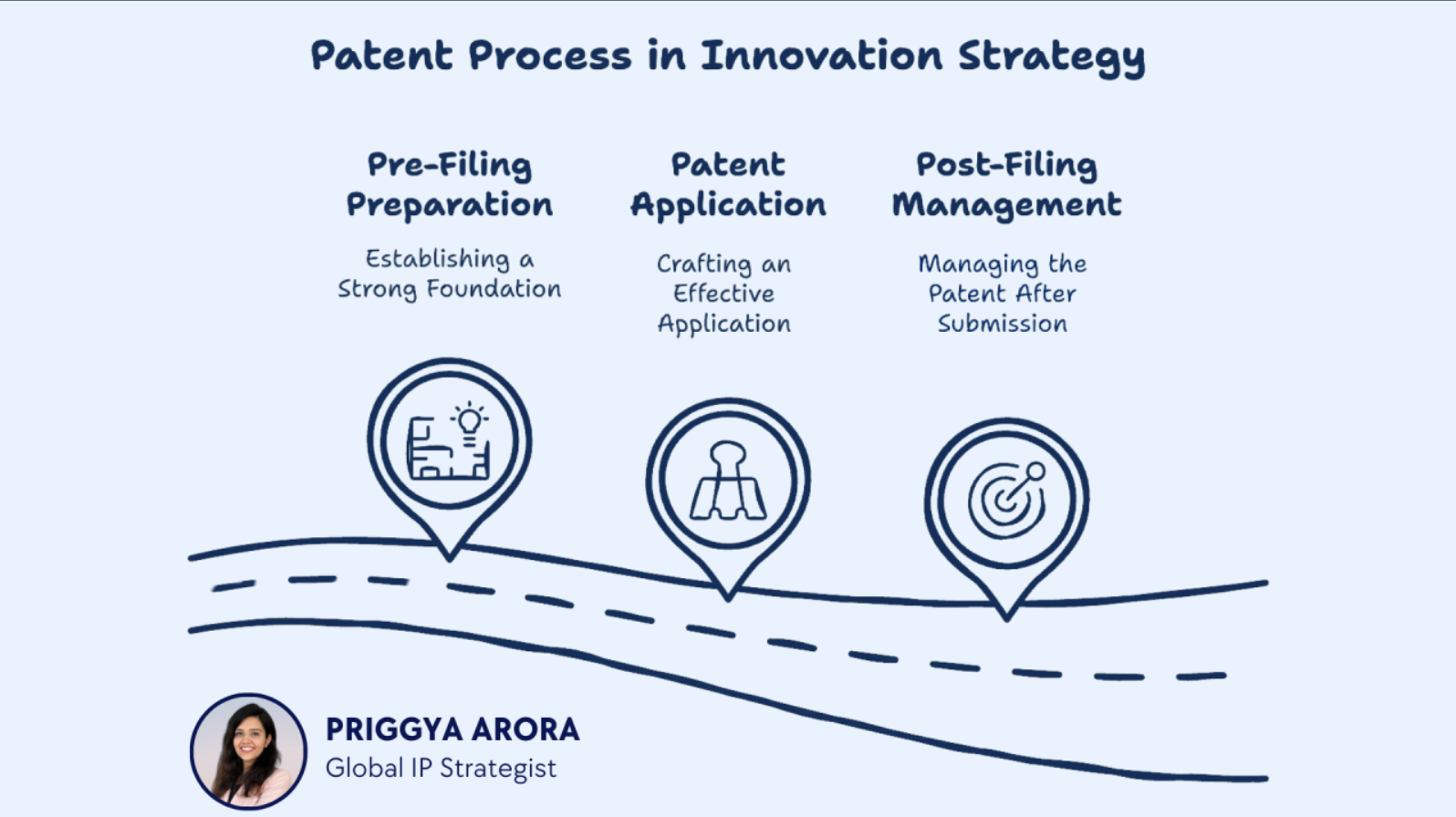
1. Pre-Filing Preparation: Laying the Strong Foundation
Thorough preparation should be the focus before filing. This stage determines the success of your patent journey.
- Conduct a Patentability Search: Ensure your invention is truly novel—research existing patents to avoid wasting time and resources on something already patented.
- Refine Your Idea: Work on technical and commercial aspects of your invention. Ensure it solves a real problem and has market potential.
- Create a Strong Disclosure: Document every detail of your invention. Include variations and potential applications—it’s the backbone of your patent.
- Evaluate Business Goals: Decide how the patent aligns with your business strategy. Are you seeking to license, manufacture, or protect market share?
- Maintain Confidentiality: Avoid publicly disclosing your invention before applying. Premature disclosure could lead to a loss of rights.
2. Filing a Patent: Crafting an Effective Application
This is where the “patent pending” status comes into play, but filing isn’t just about paperwork—it’s a strategic move.
- Draft an Effective Patent Application: Ensure your claims are strong and comprehensive. Poorly drafted patents are vulnerable to rejection from the Patent Office.
- File Provisional or Complete Application Strategically: A provisional application provides “patent pending” status and buys time to refine your invention, but it’s only a placeholder. A complete/ non-provisional application secures substantive rights.
3. Post-filing Management: Beyond ‘Patent Pending’
The journey doesn’t end with a “patent pending” label. To make the most of your invention, focus on what happens next.
- Monitor the Patent Process: Track the examination process and respond promptly to office actions or objections.
- Develop a Commercialization Plan: Identify ways to monetize your invention. This could include licensing, manufacturing, or selling the patent.
- Expand Protection: Consider filing for international patents if your invention has global potential.
- Enforce and Defend Your Patent: Be vigilant about potential infringements and enforce your rights when necessary.
A Comprehensive Strategy Wins the Innovation Game
Relying solely on “patent pending” status is like putting a sign on a house you haven’t fully built yet. It might look impressive, but it doesn’t provide the structural strength your invention needs in the competitive market.
A robust IP strategy spans from pre-filing research to post-grant enforcement, ensuring that your invention is not only protected but also positioned for long-term success.
So, the next time you think about a “patent pending” status, remember: it’s not the destination—it’s just a stop along the way.
What’s your approach to building an effective patent strategy? Let’s discuss in the comments!
Interested in innovation, technology and patent protection? I have a lot of insights into how technology protection works from my years in the field, and I’ll be sharing more of them on this blog.
To never miss an update, subscribe to my newsletter here.